Price Action - Inside Bar Setup & Some Thoughts
Let's start with my thoughts today. The stock market is such a rabbit hole. As I dive deeper I find that there is so much to learn, and I understand why it may turn some people away. The investment it takes to learn the concepts, the strategies, the theories, applying it to actual price of a stock. Time and money are the greater investments. I think something I remind myself of is, the time will pass and I wish I would've done this 5+ years ago. So this is a reminder: Do not give up, do not self sabotage, do not think you don't have what it takes, do not underestimate yourself, and do not cry about having so much in your plate.
Inside Bar Setup
The inside bar setup is slightly similar to the engulfing setup in the sense that it uses two bars. What differentiates this setup from the previous one is that the first bar referred to as "mother bar" is bigger than the one that follows it, we'll refer to it as "inside bar" moving forward. Note that for this setup or strategy to be true, the inside bar must be inside the mother bar, this includes the high/low and body of the candlestick.
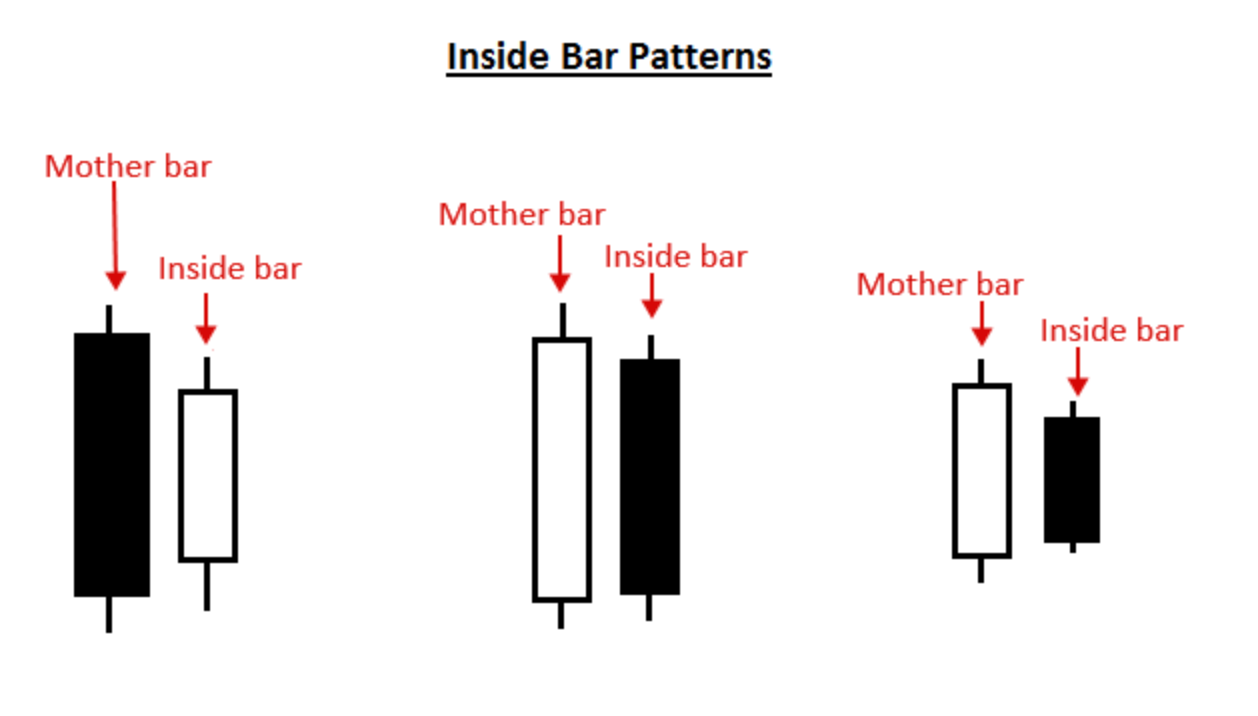
As you can see in the screenshot above, the inside bar is always inside the mother bar. So, with the above mentioned, how do we use it? how can we identify it?
According to priceaction.com, there are two ways in which we can trade using inside bar setup. First, in the direction of the trend, this gets to be known as "breakout play". Let's take a look at the example provided by the site:
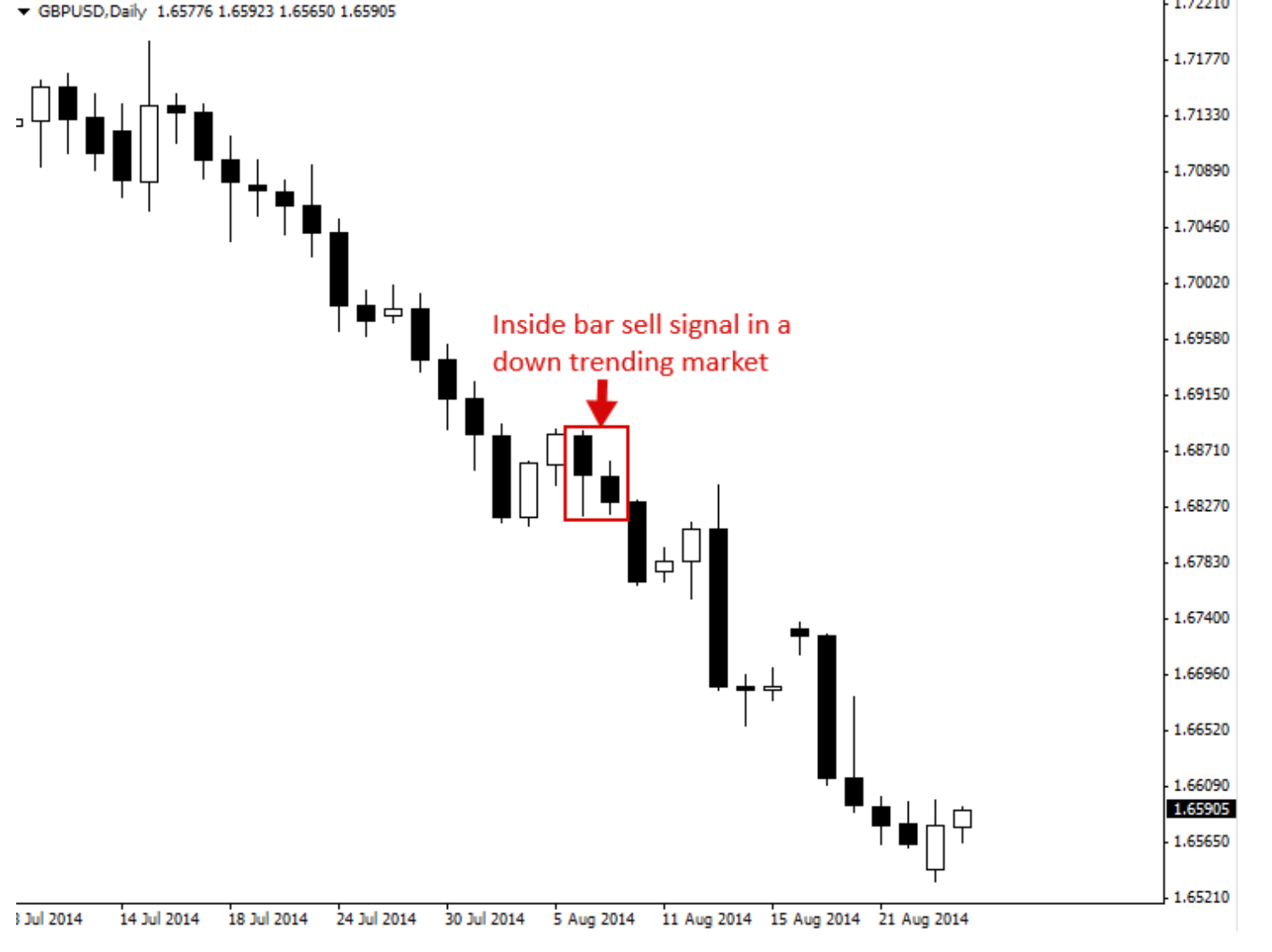
As you can see, the above photo is looking at a downtrend, and you may wonder well why would I buy when it is in downtrend and go lower? Well, personally I think this is a great strategy for put options (we will discuss this later when we get to options, but it's basically the prediction of a stock going down in price by a certain date). At the same time though, I think the above can be used to sell and stop a loss, meaning, not losing all the investment.
Similarly, there is an uptrend inside bar setup, let's look at it:
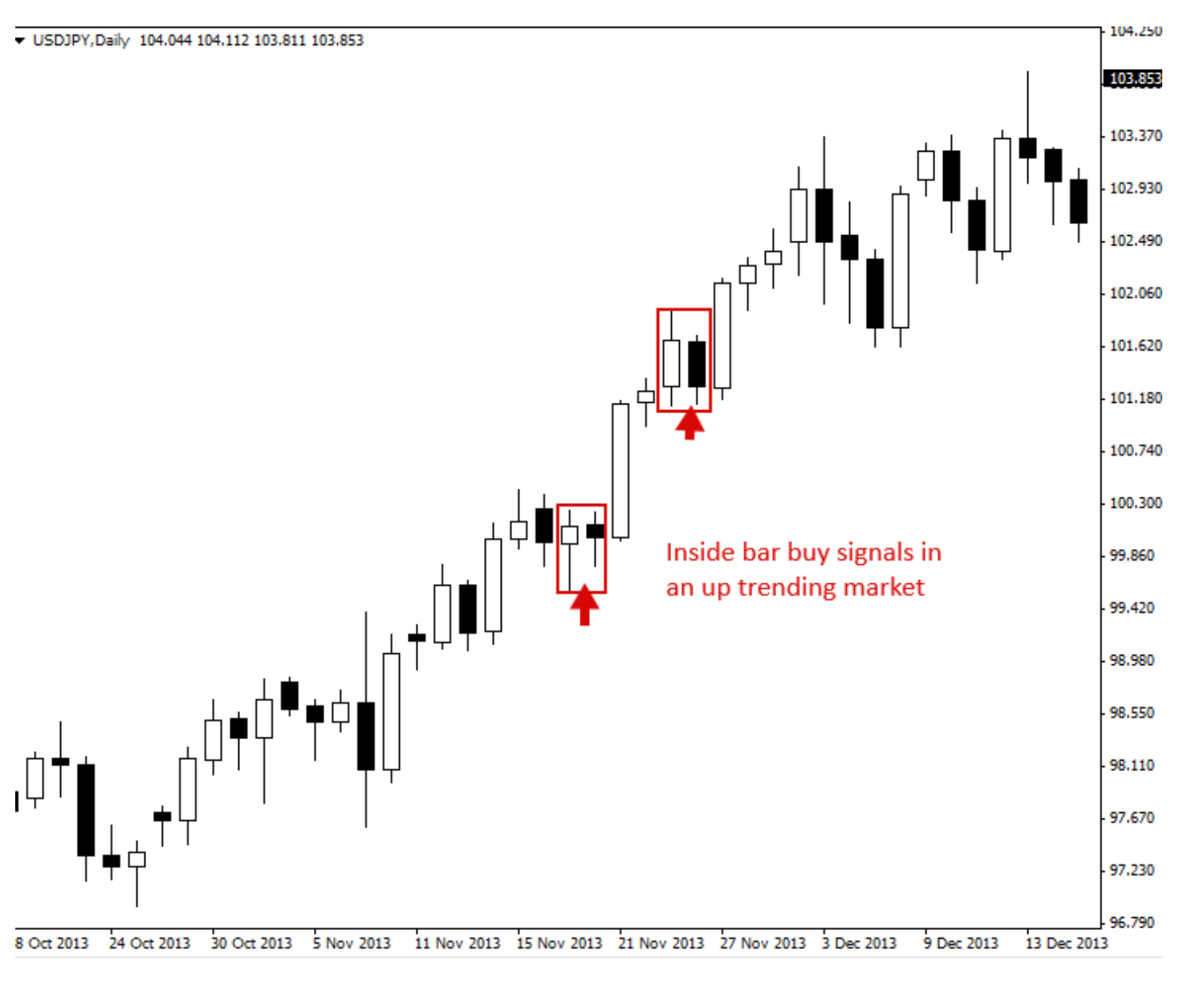
The above chart certainly showcases an uptrend, and the inside bar setup observed twice can tell us that the uptrend will continue, which means it is a great opportunity to buy a stock, enter a trade, or place a call option contract.
So, we've looked at the inside bar with a trend, let's look at how we can use the inside bar against the trend. In order to understand this better, we need to refresh out memory with two terms from the beginning of our earlier blogs, "support" and "resistance" also referred to as "the floor" and "the ceiling" in a chart. The resistance is when the stock stops going up in price, while the support is the opposite and the stock typically stops from reaching lower lows. At these points is when we can expect to see the inside bar in play and used for reversal.
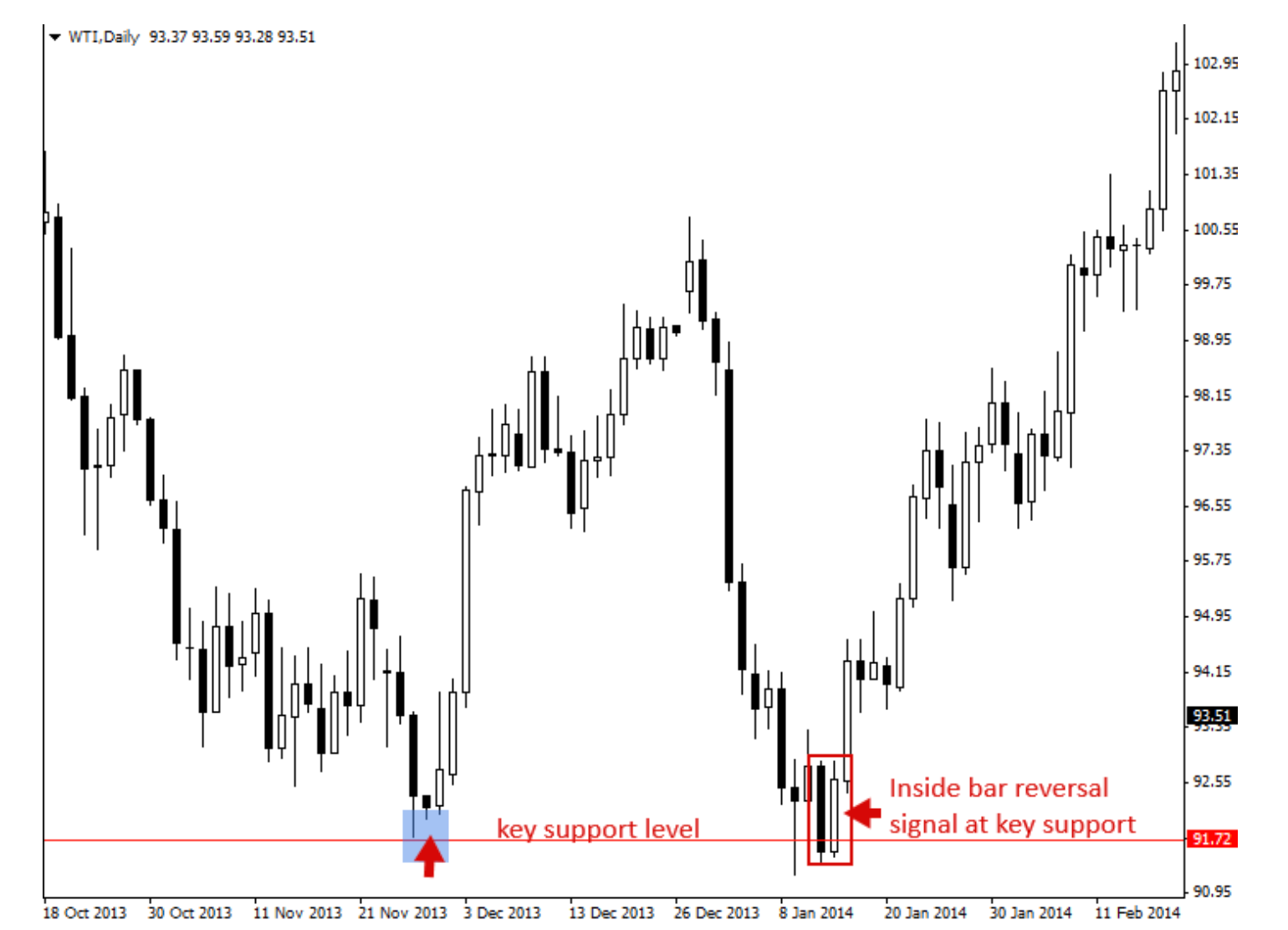
As shown above, the support level or "floor" is highlighted, and you can see the inside bar setup, where the inside bar is within the range of the mother bar. At this point, I think I would buy a stock and expect it to increase in price. Now let's look at the opposite:
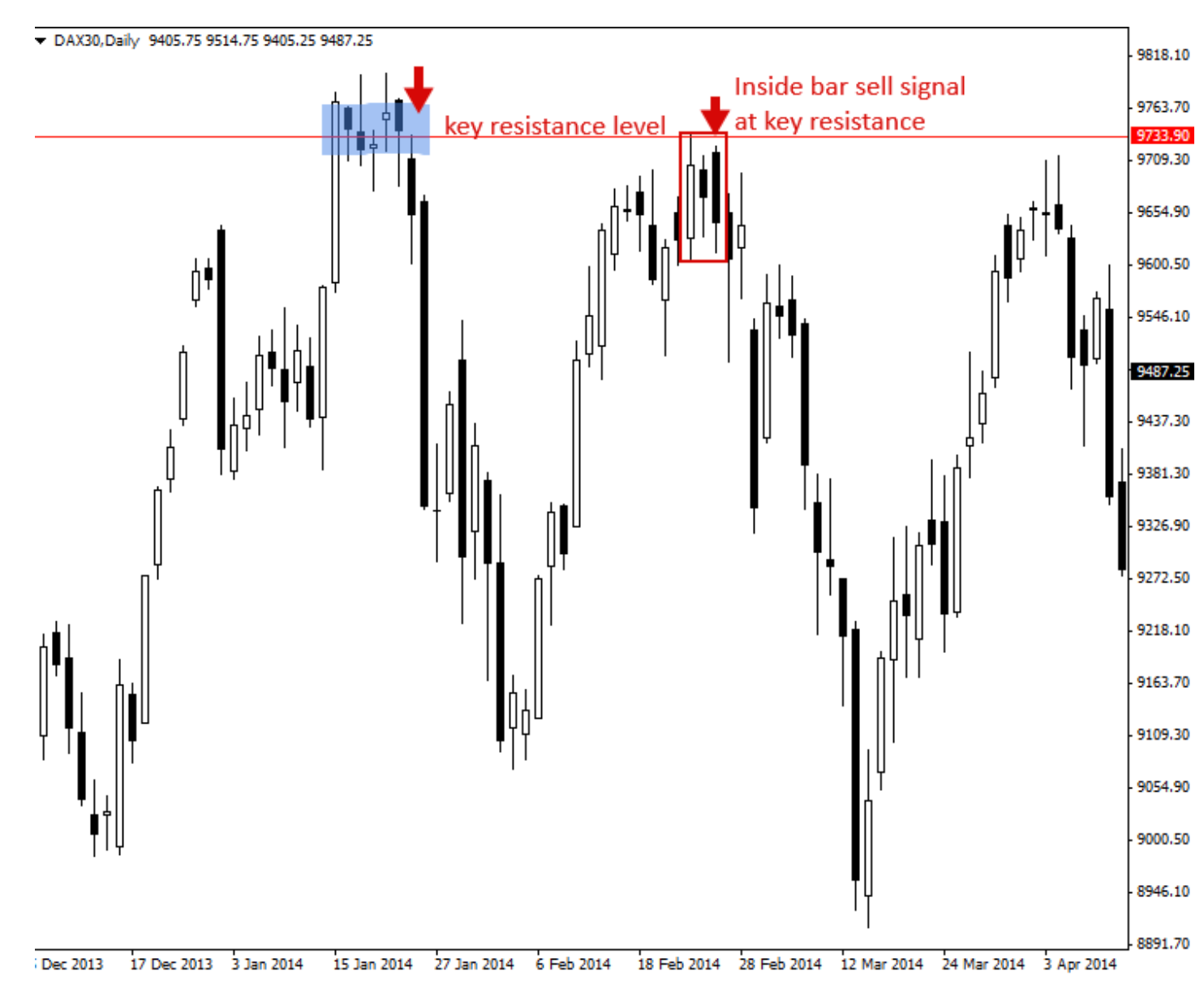
Self explanatory, the inside bar is shown at the resistance level, which signals trend reversal and would be suggested to sell or place put option contract.
So, let's look at $NKE and try to identify one (maybe):
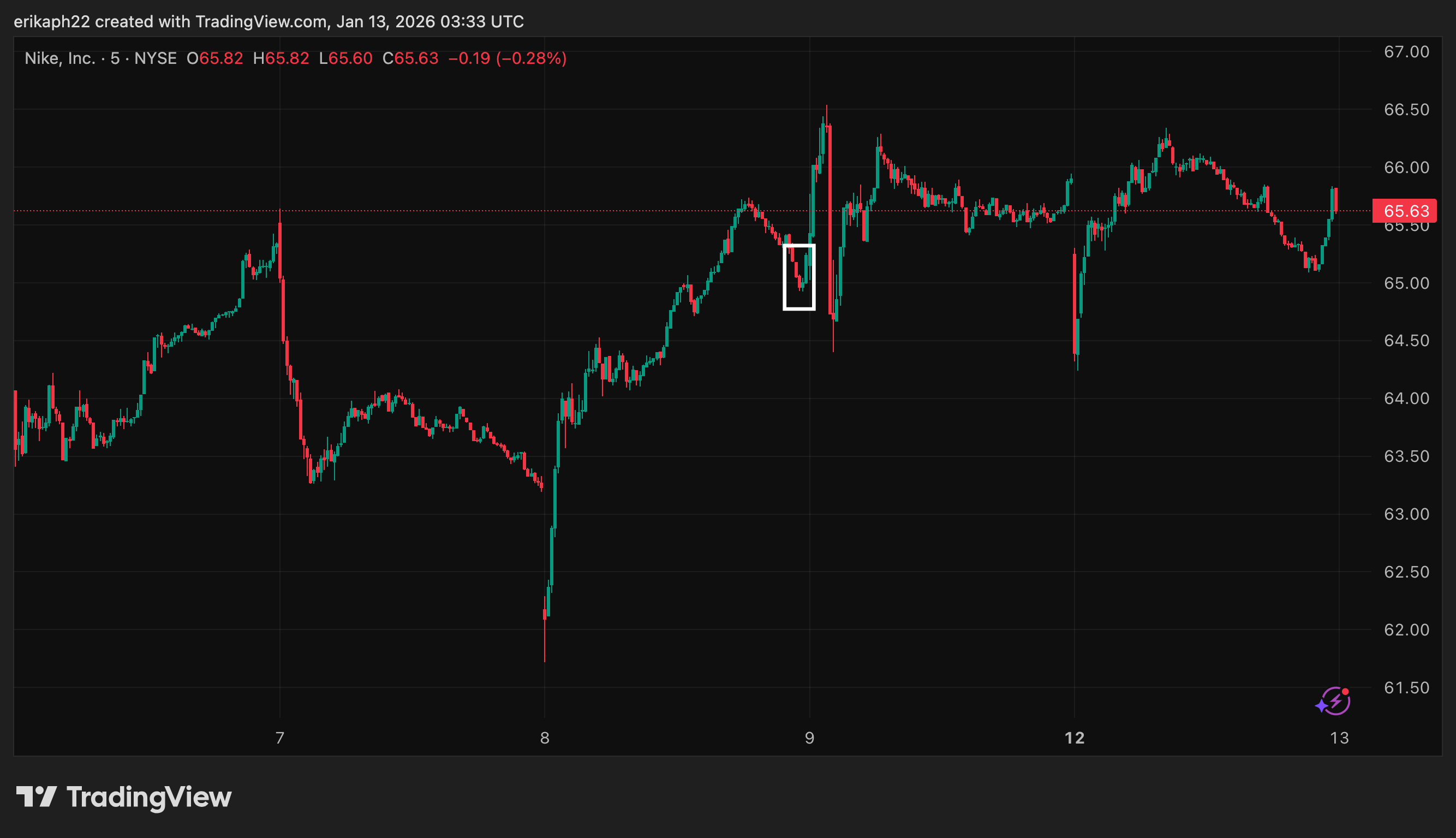
As you see, there is a trend reversal on January 9, where the inside bar is smaller than the mother bar. While the support is not obvious, we see it at play.
Final Thoughts
I like this setup, but don't think it's as reliable for my current stock. I think I'll look at a different stock tomorrow and see if we can use it and predict some pricing. Otherwise, I'll look at tomorrow's day chart but with my 9-5 and in office day it will be a challenge.
Member discussion